Wednesday, December 17, 2025

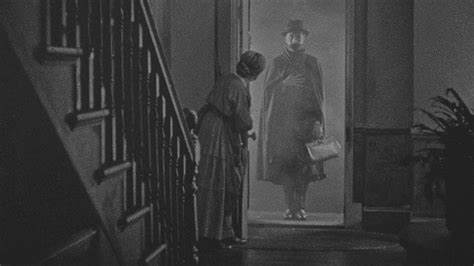
Alfred Hitchcock Presents: The Case of Mr. Pelham (1955)


The Case of Mr. Pelham is the 10th episode of Alfred Hitchcock Presents and the third directed by Hitch himself. 

In this episode, a man named Mr. Pelham (Tom Ewell) believes that he has a double who looks exactly like him and who is impersonating him. 

This is a truly wonderful episode. From the start it has an odd and uneasy feel to it. As it goes on the sense of mystery and dread is built up perfectly keeping its audience is suspense in a way only Hitch can. With a smart and compelling script, we are made to doubt everything we feel. This is increased by the fact that we never know anything more than our main character does at any time. This easily puts us into his shoes and makes us feel the same puzzlement and horror that he does. While the story is incredibly implausible, in true Hitchcock fashion we are made to believe everything. However, the main reason this episode works is Tom Ewell's (in his only role in this series) incredibly performance. He is truly magnetic here and conveys the dread and emotional uneasy of the character perfectly.

The episode also benefits from a truly terrifying ending that perfectly lives up to the wonderful build up. Since this implausible story feels so real to us, we begin to believe that such a thing could actually happen to any of us. This makes the ending just as horrifying and frightening as anything in a great horror movie.  

The episode also truly benefits from great cinematography John L. Russell (a regular cinematographer on this series and later the cinematographer for Hitch's cinematic masterpiece Psycho). It gives this episode a film-noir type feel that fits the story perfectly. 

The outro with two Alfred Hitchcocks is truly hilarious and presents Hitch's dry but absurd sense of humor in a wonderful fashion. 

This is the third out of 18 episodes to be written by Francis M. Cockrell. Interestingly the two previous episodes that Cockrell wrote were also the two previous episodes that Hitch directed. 

-Michael J. Ruhland

Saturday, December 13, 2025

Alfred Hitchcock Presents: The Long Shot (1955)


This marks the 9th episode of Alfred Hitchcock Presents. It is the second of seven episodes directed by Robert Stevenson. Stevenson is best known as a Disney director. In fact, he was one of the studio's finest live action directors, having directed such Disney films as Johnny Tremain (1957), Old Yeller (1957), Darby O'Gill and the Little People (1959), The Absent Minded Professor (1961), Mary Poppins (1964), That Darn Cat (1965), The Love Bug (1969), Bedknobs and Broomsticks (1971) and Herbie Rides Again (1974) among many others. It is also the second of ten episodes written by  Harold Swanton, a very prolific TV writer. His other Alfred Hitchcock Presents episodes would include The Long Shot (1955), Portrait of Joycelyn (1956), Coyote Moon (1959), Anniversary Gift (1959), An Occurrence at Owl Creek Bridge (1959), Summer Shade (1961), Museum Piece (1961), Bang Your Dead (1961) and The Twelve Hour Caper (1962) as well as The Alfred Hitchcock Hour episode Body in the Barn (1964). Other TV shows he worked on include The WhistlerGunsmokePerry MasonWagon TrainBonanza and Little House on the Prairie. He also occasionally worked on movies like Disney's Rascal (1969).   

In this episode a compulsive gambler (Peter Lawford) lands in financial debt. He sees an ad for someone looking for a traveling companion to San Francisco. Along the way he decides to change identities with his traveling companion (John Williams). However, this leads to more trouble than he ever anticipated. The opening involves Hitch playing a slot machine that gives him actual fruit. 

This is truly an excellent episode. Though the story has been done before but that doesn't stop this from being compelling viewing. There is a delightfully moody and atmospheric feel to this episode thanks to Stanley Wilson's haunting music and Reggie Lanning's atmospheric cinematography. Many scenes have that cinematic quality that makes this series stand out among many other TV shows of its time. The episode also has some very effectively dark scenes that leave a real sense of unease in the truest of Hitchcock fashion. Also helping this episode work is that Peter Lawford (in his own gives one of the best performances I have seen from him, perfectly capturing the shiftiness of such a character. 

The episode is not perfect however as it can become too talky at times and there is an over reliance on narration. The ending is also too predictable from a show like this which is best known for its shocking twists. 

John Williams as the traveling companion, will be a familiar face to most Hitchcock fans. This was the first of ten episodes of Alfred Hitchcock Presents that he acted in. However, Hitch fans will know him best for his roles in the Hitchcock movies, Dial M for Murder (1954) and To Catch a Thief (1955).  In Dial M for Murder, he played Chief Inspector Hubbard, a role he also played on stage and in a 1958 television adaption. 

-Michael J. Ruhland 

Tuesday, December 2, 2025

Alfred Hitchcock Presents: Our Cook's a Treasure (1955)


This is the second out of 44 episodes of Alfred Hitchcock Presents to be directed by Robert Stevens, who would also go on to direct 5 episodes of The Alfred Hitchcock Hour. This is also the second of 30 episodes written by Robert C. Dennis (it was based off a story by mystery novel writer Dorothy L. Sayers). 

In this episode a man (Everett Sloane) thinks his housemaid (Beulah Bondi) might be a serial killer.  

This episode is very much held together by the wonderful performances by Everrett Sloane and Beulah Bondi. Both of them are very compelling to watch and make this simple story very engaging. The story itself is quite well handled. While the twist is not hard to see coming, this episode does quite a good job of putting us in the place of the main character. We can understand and feel his panic and paranoia growing. It is hard to say that any of us would fall into the same paranoia if we were in his place. Steven's directing is also very strong here. His pacing is perfect, and the episode never once feels dull, nor does it ever really drag. The episode also remains visually interesting throughout with some strong atmospheric shots that enhance the suspense of the story. 

Hitch's opening and closing sequences with him as a wine taster are fine but, in my opinion, not as funny as his best host sequences.   

This was the first of three episodes to star Everett Sloane. Though Sloane had a very prolific career in both movies and TV, he is probably best known for playing Mr. Bernstein in Orson Welles' masterpiece, Citizen Kane (1941). This is the only appearance on the show by Bulah Bondi, a great character actress, whose filmography includes such classics as Make Way For Tomorrow (1937), Mr. Smith Goes to Washington (1939), Remember the Night (1939), Penney Serenade (1941), Watch on the Rine (1943), It's a Wonderful Life (1948), So Dear to My Heart (1949), A Summer Place (1959) and plenty more. 

-Michael J. Ruhland


Tuesday, November 18, 2025

Downhill (1927)


Hitch followed his first true suspense film (and the biggest financial and artistic success to date), The Lodger (1927), with a college melodrama. 

In this film, Roddy Berwick (Ivor Novello) scores the winning try at an important rugby match in his college. This makes it so that he becomes School Captain. Just everything looks like it couldn't be better for him, he is accused of misconduct by a waitress. In reality the guilty party is his good friend, Tim Wakely (Robin Irvine). Because of this he is expelled and from here his life gets worse and worse. 

This movie was based off a play of the same name. That play was written by David L'Estrange and actress Constance Collier. David L'Estrange was a pen name for Ivor Novello, who would star in the film version (he was also the star of The Lodger). Before Downhill, the two had written a play entitled The Rat. The Rat was a massive stage success and would spawn a 1925 film version which would be directed by Graham Cutts, who had previously directed multiple films on which Hitch had worked as an assistant director. That movie would be such a success that it would give way to two sequels Triumph of the Rat (1926) and The Return of the Rat (1929). Both of those movies were also directed by Graham Cutts and starred Ivor Novello. The play featured a risqué scene in which Novello was seen washing his legs after a rugby match. Critic James Agate wrote, "The scent of honest soap crosses the footlights." This scene would not make it into the movie version, but Hitch does include a scene where Novello is seen naked from the waist up.  

Despite being based on a play, this movie often jumps from setting to setting. You would think that this was a liberty that was taken to make the movie more cinematic. However, that was not the case as Hitch told Francios Truffaut (in the book long interview Truffaut did with Hitchcock), "The original play was written that way." Truffaut was naturally surprised by this statement and Hitch responded, "No, no. It was done as a series of sketches. It was a rather poor play." 

The storyline itself may be melodramatic and a little hokey but for the most part it works. Much of this is due to the main character who is immediately sympathetic and likable, even before his selfless act that sets the story in motion. This is greatly enhanced by Ivor Novello's performance. It is easy to see why he became such a massive star. At times his performance is effortlessly charming and likable, while at other times it has real dramatic weight to it. Regardless his performance is always believable and compelling. Though sometimes the hardships that meet him seem excessive, our emotional connection to this character keeps us invested in the story, even when it is at its most melodramatic. Even with the seriousness of the story, the filmmakers are able to slip in a few comedic moments as well. These comedic moments are well integrated into the story and keep it from feeling too serious or depressing. These scenes are also pretty funny. Incorporating humor into mostly serious stories, would later become almost a staple of Hitch's work and this movie provides a great example of that. However, the real star of this film remains Hitch's visual storytelling. It is amazing that this early in his career, Hitch was already a master of visual filmmaking. The visuals here are wonderful and always simply stunning to look at. Like in all the best silent films, for the most part we can tell what is happening in the story through the visual storytelling alone. In fact, this movie has quite few intertitles for a silent drama. This is very effective and a great example of what Hitch would refer to as "pure cinema." Though Hitch would often dismiss his filmmaking in these early movies, the visual storytelling here, shows Hitch as a master of the medium.

However, this movie does have its flaws. The runtime is simply longer than it needs to be, and the movie can drag at times. The ending also feels really forced and rushed. It simply strains any form of believability.  

Despite its flaws, this is a quite strong movie that tends to go overlooked in discussions and writings about Hitchcock's British movies. 


Many of Alfred Hitchcock's British films feature moments of experimental visual filmmaking that the director would abandon in his later Hollywood work. One such scene takes place in a Paris cabaret. Hitch described this scene to Truffaut. "Yes, I experimented there quite a bit. I showed a woman seducing a younger man. She is a lady of a certain age, but quite elegant, and he finds her very attractive until daybreak. Then he opens the window, and the sun comes in, lighting up the woman's face. In that moment she looks dreadful. And through the open window we see people passing by carrying a coffin." More visual experimentation showed up in the use of dream sequences. About these scenes Hitch told Truffaut, "I had a chance to experiment in those scenes. At one point I wanted to show that the young man was having hallucinations. He boarded a tiny schooner, and there I had him go down to the fo'c'sle, where the crew slept. At the beginning of his nightmare, he was in a dance hall. No dissolve, just straight cutting. He walked over to the side wall and climbed into a bunk. In those days dreams were always dissolves and they were always blurred. Though it was difficult, I tried to embody the dream in the reality, in solid, unblurred images."    


This movie would mark one of the earliest film roles for actor Ian Hunter. In a 1936 issue of Film Weekly titled My Screen Memories, Alfred Hitchcock wrote, "When I was making Downhill I started Ian Hunter on his film career simply because I saw him in a Basil Dean play at the St. Martin's theater when I was casting the film, and he happened to suit one of the roles." In a 1937 article Hitchcock wrote (titled Direction) the director remembered making a scene (that didn't make it into the movie) involving Hunter. In 1926 I made a film called Downhill, from a play by Ivor Novello, who acted in the film himself, with Ian Hunter and Isabel Jean. There was a sequence showing a quarrel between Hunter and Novello. It started as an ordinary fight; then they began throwing things at one another. They tried to pick up heavy pedestals to throw and then the pedestals bowled them over. In other words, I made it comic. I even put Hunter into a morning coat and stripped trousers because I felt that a man never looks so ridiculous as when he is well dressed and fighting. This whole scene had to be cut out; they said I was guying Ivor Novello. It was ten years before its time."


The screenplay is by Eliot Stannard, who had previously worked for Hitch on The Pleasure Garden (1925), The Mountain Eagle (1926) and The Lodger. He would go on to write for Hitch on The Farmer's Wife (1928), Easy Virtue (1928), Champagne (1928) and The Manxman (1929). 

This film's cinematographer was Claude L. McDonnell. He had previously worked on Woman to Woman (1923), The White Shadow (1924) and The Passionate Adventure (1924), all of which Hitch served as assistant director on. He would go on to work on one more Hitch movie, Easy Virtue

This movie marked the last film Hitch and Novello made together. MGM hired Novello and the Welsh actor traveled to Hollywood to make movies there. Unfortunately for him, after making a screen test MGM decided that his voice and appearance would not suit a Hollywood star. Instead, they hired him as a script doctor (someone who touches up flawed scripts). During his two years a script doctor, Novello worked on MGM's Tarzan pictures. He even receives a dialogue credit for Tarzan the Ape Man (1932). He opted out of his contract and moved back to England, where he returned to the stage. He would go on to become one of Britian's most successful writers of musical comedies. In 1951 he would die suddenly from a heart blockage at only 58 years old. 

Critics were greatly impressed by the visual filmmaking but found the story very poor. 

You can watch this movie below on YouTube. 


-Michael J. Ruhland

Resources Used

Hitchcock by Francios Truffaut

The Alfred Hitchcock Story by Ken Mogg.

Hitchcock on Hitchcock Edited by Sidney Gottlieb

https://www.tcm.com/tcmdb/title/494936/downhill#articles-reviews?articleId=1325745

https://www.imdb.com/


Wednesday, November 5, 2025

Alfred Hitchcock Presents: Breakdown (1955)


Breakdown marked 7th episode of Alfred Hitchcock Presents and the second directed by Hitch himself. 

In this episode a man (Joseph Cotton) is involved in a bad car accident and becomes paralyzed. However, when he is discovered, people believe that the man is already dead. 

It is a bit strange to think that this episode was directed by Hitch himself. Hitch always argued for what he called "pure cinema," which is where the story is told visually rather than through dialogue. It is true that this episode is television and not cinema, but it still is strange how far this is from pure cinema. You can close your eyes with this episode on, and you could fully appreciate it as if it was an old radio drama. The narration and dialogue tell the whole story without the visuals. 

Despite how this doesn't fully fit into Hitch's usual style of filmmaking, it is a truly gripping episode. The story and writing are top notch. This episode truly puts in the place of Joseph Cotton's character. This is a truly horrifying place to be. Picturing ourselves being in the most terrifying position possible is the type of stuff nightmares are made of. Though there is nothing supernatural here, this is pure horror at its most effective. Joseph Cotton's performance is also excellent, which is incredibly important considering how much of this episode relies on narration. 

Another (and often overlooked) factor to this episode is the lack of a musical score for most of the episode's runtime. When a musical score kicks in during the dramatic finale, the scene is all the more effective because of it. 

Alfred Hitchcock's introduction and outro are hilarious in the typical style of dry Hitchcock humor. Him talking about how reading thrillers relaxes him and get his mind off his work as well as how he is trapped in the TV powerless are Hitch's humor at its best. 

Because of this, despite its reliance on narration and dialogue, this is often considered one of the best episodes of the show. I can certainly see why. 


Joseph Cotton had previously played the villainous role in the Alfred Hitchcock movie, Shadow of a Doubt (1943). That film was the one Hitch considered his favorite that he had made. It also provides Cotton with possibly his greatest acting role. Cotton would also go on to appear in two more episodes of this show (Together (1958), Dead Weight (1959)). Cotton is probably best known for his work with another great filmmaker, Orson Welles. He had important roles in what are considered two of Welles' best directorial efforts, Citizen Kane (1941) and The Magnificent Andersons (1942). He also played the lead role in the movie that had one of Welles' most famous acting roles, The Third Man (1949). 

This episode was written by Francis M. Cockrell and Louis Pollock. Cockrell wrote a staggering 18 episodes of this series. He would even direct two of the episodes, Whodunit (1956) and The Rose Garden (1956). On the other hand, this is the only episode Louis Pollack receives on the show. 

Editor Edward W. Williams won an Emmy for his work on this episode. Williams was the regular cinematographer for this series and its follow-up The Alfred Hitchcock Hour. Other TV shows he worked on include The Life of Reily, SuspicionIronside and The Invisible Man.  

This episode would later be remade in 1985 for the revival series of Alfred Hitchcock Presents. That remake would be directed by Richard Pearce and star John Heard. 

-Michael J. Ruhland 


Wednesday, October 29, 2025

Afred Hitchcock Presents: Salvage (1955)


Salvage marks the 6th episode of Alfred Hitchcock Presents. 

In this episode a gangster (Gene Berry) who has just been released from prison, goes searching for the woman (Nancy Gates), who he believes is responsible for his brother's death.  

This is truly an excellent episode. Starting off right in the middle of the action proves to be a perfect way to tell this story as we fill out the backstory for the characters more and more as the story goes on. As we do this we discover that the characters are much more complex than we originally thought. The more we learn about these characters, the more invested in them we become. Because of this for characters we only spend less than a half hour with, we feel like we know them completely. The story is also incredibly well written. At first, we seem to think we know where it is going but it surprises us while still making perfect sense. 

The real reason this episode works so well is because of the acting. Of course, such reliable actors as Gene Berry (in his second appearance on this show) and Elisha Cook Jr. are excellent. However it is the relatively unknown Nancy Gates, who steals the show with her very emotionally vulnerable performance.

The opening and closing bits with Hitchcock on a film set are delightfully fun and silly, contrasting perfectly with the darker main story. 

This is the first episode of this show directed by Justus Addiss. He would direct a total of ten episodes. His other episodes would include A Bullet for Baldwin (1956), Safe Conduct (1956), Nightmare in 4-D (1957), The Night the World Ended (1957), Martha Mason, Movie Star (1957), The West Warlock Time Capsule (1957), The Indestructible Mr. Weems (1957), Miss Paisley's Cat (1957) and Night of the Execution (1957). Other TV series he directed for include Rawhide, Mister Ed, The Restless Gun, The Twilight Zone and Voyage to the Bottom of the Sea.  

-Michael J. Ruhland

Thursday, October 2, 2025

Alfred Hitchcock Presents: Into Thin Air (1955)


Into Thin Air marks the 5th episode of Alfred Hitchcock Presents and aired on October 30th, 1955.

In this episode, a young woman (Patrica Hitchcock) leaves her sick mother (Mary Forbes) in a hotel room. However, when the young woman returns to the hotel, she finds her mother is missing and no one remembers either her or her mother. 

I really liked this episode. The main reason for this is Patricia Hitchcock in the main role. This may be her career best performance as she really draws us in making us believe every second of this implausible story. The rest of the cast is excellent as well including a very good performance from Alan Napier, best known for playing Alfred on the 60's Batman TV show. While the story itself feels familiar, it is quite well handled with a great twist at the end. The episode also does a fantastic job of creating a bit of suspense and keeping you wondering what exactly is going on

This episode's storyline very much resembles the Alfred Hitchcock film, The Lady Vanishes (1938), something Hitch himself acknowledged in his introduction.

Hitch's daughter Patricia Hitchcock stars in this episode. This is the first of ten Alfred Hitchcock Presents episodes she would appear in. The other episodes were The Older Sister (1956), The Belfry (1956), I Killed the Count Part 1 (1957), The Glass Eye (1957), Silent Witness (1957), The Crocodile Case (1958), The Morning of the Bride (1959), The Cuckoo-Clock (1960) and The Schartz-Metterklume Method (1960). She also appeared in her father's movies, Stage Fright (1950), Strangers on a Train (1951) and Psycho (1960). When Alfred Hitchcock gives his closing remarks, he tells us "I thought the little leading lady was rather good didn't you?" 

This is one of only two episodes directed by Dan Medford (the other was Triggers in Leash (1955)), a very prolific TV director. Some of the other TV series he worked on include Climax!, The Riffleman, The Untouchables, The Twighlight Zone, The F.B.I., The Fall Guy and Dynasty.

This is the first episode written by Marian B. Cockrell, who would go on to write ten more episodes. These episodes were Santa Claus and the Tenth Avenue Kid (1955), There Was an Old Woman (1956), Whodonit (1956), Wet Saturday (1956), Conversation Over a Corpse (1956), The Rose Garden (1956), The West Warlock Time Capsule (1957), Miss Paisley's Cat (1957), Miss Bracegirdle Does Her Duty (1958) and The Schartz-Metterklume Method (1960). 

-Michael J. Ruhland

Tuesday, July 8, 2025

The Lodger (1927)


Note: This post includes spoilers for the film.

In his book length interview with Francois Truffaut, Hitch stated, "The Lodger was the first true 'Hitchcock movie.'" This may not have been Hitch's first film, but it was the first that felt like the type of movie Hitch would become known for. This was no longer the romantic melodrama that characterized his career before this, this was a suspense film, whose plot revolved around murder and mistaken identities. Such a view of this film would be shared by critic and biographer Donald Spoto, who would state that this was the first time Hitchcock, “revealed his psychological attraction to the association between sex and murder, between ecstasy and death”.

In this film, a serial killer, known as The Avenger, is murdering innocent blond women. Meanwhile a lodger (Ivor Novello) moves into a house where a happy family lives. Because of the lodger's strange behavior, the landlady (Marie Ault) starts to believe that he is perhaps the serial killer. When he starts spending time with her blonde daughter (June Tripp) she grows very nervous. 

A few months ago, I took some friends to see this film at a movie theatre that plays classic films (Old Town Music Hall in El Segundo, CA). Some of them had never seen a silent film before and some only had a passing familiarity with Alfred Hitchcock. Yet they all found themselves very much enjoying the movie and some admitted that they were surprised by some of the turns the story took. That this movie can still surprise and grip modern audiences with little to no familiarity with silent movies speaks to the power of Hitch's filmmaking. 

This movie grips its audience from the very start. The opening shot is a close-up of a woman screaming. We have no context for this at first. This shot is followed by a montage of images. First, we see the words "to-night golden curls" in flashing lights. Then we see a woman's body lying dead on the floor. Afterwards is an older woman reacting in horror. Then we see a policeman taking down notes. Through these images our minds start to do detective work piecing together a story from images. This causes us to immediately become mentally absorbed in the film before we even meet the main characters. A similar opening would later take place in Rear Window (1954) as the camera pans across L.B. Jeffries apartment giving us views of various photographs and newspaper clippings that cause us paste together what has happened to the main character before a single word of dialogue is spoken. Both scenes are also a great example of Hitchcock's ideal view of "pure cinema," where the story is told through various images rather than dialogue or intertitles. It is also fascinating that the opening shot is from the point of view of the serial killer, a character who we will never once see onscreen. In his book, Hitchcock the Murderous Gaze, William Rothman examines this theme writing, "The opening shot shows us what the Avenger sees, even if it withholds all views of this figure from us (in particular, it withholds the woman's frightful vision). Within the world of the film, the Avenger is a viewer, The scene of which this is shot is a fragment is rooted in our own role of viewers. We possess views of this world, while necessarily remaining unseen by the being who dwell within it."

Many films with this great of an opening fail to live up to the great start. That is not the case with this movie at all. Hitch's passion for visual filmmaking is striking throughout. As can be seen in his films from this period, the influence of German expressionism is very clear. This can be seen in the ways each of the shots are set up, the various sets and the great stylized intertitles. Many of the shots here are just as perfectly framed as those in Hitch's later more popular films. As is true of many of Hitch's best films, there are shots that will stay with you long after you finish watching. Though Hitch would sometimes refer to his British work as the work of a talented amateur, the visual storytelling in this film prove that he was far from an amateur. At the same time these visuals are not only here to look great but also to help tell the story. Thanks to these visuals, there is a great sense of atmosphere throughout the whole film. 

Yet this movie is not only worth watching for its visuals. While its story is rather simple (especially compared to Hitch's later work), it is quite engaging. We care about these characters. They may not be complex, but they are likable, and the happy ending (even if Hitch himself wasn't a fan) feels completely deserved and satisfying. There are also enough twists and turns to keep the audience guessing throughout. 


About the formation of this film Hitch stated, "I had seen a play called Who is He?, based on Mrs. Belloc Lowndes's novel, The Lodger. The action was set in a house that took roomers, and the landlady wondered whether the new boarder was Jack the Ripper or not. I treated it very simply, purely from her point of view. Since then, there have been two or three remakes, but they are too elaborate."

Though today, Alfred Hitchcock is the name that most will know going into this film. The big name attached to this movie at the time was Ivor Novello, who played the title character. An actor, songwriter and singer, he was a very well-known name in the U.K. at this time. It was on this film that Hitch learned one of the most difficult aspects with working with popular stars, wasn't the stars themselves but the public perception of them. Simply put, a matinee idol like Novello could not be a villain. Because of this Hitch had to make it very clear by the end that Novello was in fact completely innocent of the crimes. This is not to say that Hitch planned to make the character an outright villain though. He had in fact wanted to end the movie with the audience still wondering whether or not the lodger was the killer. Later he ran into the same trouble making Suspicion (1941), when having Cary Grant play a character, who the audience was supposed to whether or not he was a killer. Explaining his desire to not answer the question of whether or not the lodger was a killer, Hitch told Truffaut, "In this case, if your suspense revolves around the question: 'Is he or is he not Jack the Ripper?' and you reply, 'Yes, he is Jack the Ripper,' you merely confirmed a suspicion. To me, this is not dramatic. But here we went in the other direction and showed that he wasn't Jack the Ripper at all." 

The theme of an innocent man being wrongful accused and finding themselves in danger would become one of Hitchcock's favorite motifs. It would be reused in such Hitchcock films as The 39 Steps (1935), Young and Innocent (1937), SuspicionSaboteur (1942), Spellbound (1945), Strangers on a Train (1951), To Catch a Thief (1955), The Wrong Man (1956), North by Northwest (1959) and Frenzy (1972). In his book, Hitchcock's Films Revisited, Film Scholar Robin Wood writes, "The 'falsely accused man' films typically take the form of what Andrew Britton has termed the 'double chase' plot structure: the hero pursued by the police, pursues the real villain(s)." In this Hitch's first movie with this motif, he already has established this "double chase" formula. Of these "falsely accused man" films the closest in spirit to The Lodger is his last to use this theme, Frenzy. Both have an unmistakably British setting, both feature a serial killer who is going around and killing women as well as an innocent man falsely accused of the crime and both balance out their darker story lines with a sense of humor. Frenzy however takes this plot in a much more violent and sexual nature (it is a rare Hitchcock movie ton receive an R rating). Nevertheless, it is fascinating to compare these two films and see the work of an ever-evolving filmmaker at two different points in his career. 

That the killer's victims are blonds also looks forward to future work of the great filmmaker. Hitchcock would later state, "Blondes make the best victims. They're like virgin snow that shows up the bloody footprints." Hitch would continue using blondes both as heroines and femme fatales. Due to their work with Hitch such actresses as Grace Kelly, Kim Novack, Eva Marie Saint, Janet Leigh and Tippi Hedren have all been referred to as Hitchcock Blondes. The term has become part of the common vernacular among cinephiles.    

Upon its initial release, this film was hailed by critics as a landmark in British Cinema. Its 1928 release in America would receive less positive attention from critics. A reviewer from Variety was especially harsh stating, "They took a smashing theme, gummed it up with cheap and shoddy catering to the lowest taste of what they supposed to be their public, and then further smeared it with acting and photography that belongs to the American studio of 10 years ago."  

This movie would later be remade multiple times. The Lodger (1932) would even once again star Ivor Novello. Probably the best known of these remakes is Fox's 1944 version of the same name which was directed by John Brahm (who directed multiple episodes of Alfred Hitchcock Presents and The Alfred Hitchcock Hour) and starred Laird Cregar, Merle Oberon, George Sanders (who appeared in Hitch's Rebecca (1940) and Foreign Correspondent (1940)), Cedric Hardwicke (who acted in Hitch's Suspicion and Rope (1948) as well as two episodes of Alfred Hitchcock Presents (Wet Saturday (1956) and A Man Greatly Beloved (1957))) and Sara Allgood (who appeared in Hitch's Blackmail (1929) and Juno and the Paycock (1930)). The film would also be remade again as Man in the Attic (1953), which was directed by Hugo Fregonese. The story would also be reworked in a more contemporary setting with The Lodger (2009), which was directed by David Ondaatje and starred Alfred Molina, Hope Davis and Simon Baker. 

In early 1942 the Los Angeles Times stated that Hitchcock himself was interested in a color remake of the movie following the completion of Saboteur. However, by the end of 1942, Fox would have already obtained the film rights to the story. However, Hitch had already been at least somewhat involved in a radio adaption of the story with a 1940 radio adaption. Produced by Walter Wagner (who produced Hitch's Foreign Correspondent), it was Hitchcock's idea to adapt the original novel as a radio play. This was an audition for a series called Suspense, which was originally intended as a series that would adapt Alfred Hitchcock films. As almost a forerunner to Hitch's later TV work, this series supposedly would have Hitchcock as the host. Actually, beyond suggesting this adaption and lending his name to the production, Hitchcock had little to do with the actual making of the production. Actor Joseph Kearns would even voice Alfred Hitchcock for the introduction. The stars of the radio play would be Herbert Marshall and Edmund Gwenn (both of whom appeared in Foreign Correspondent). This radio adaption would not reveal the true identity of the killer, leaving many listeners very disappointed. Suspense would actually be picked up as a radio series in 1942 but without any Alfred Hitchcock connection. You can listen to this radio production below. 


Friday, June 6, 2025

Alfred Hitchcock Presents: Don't Come Back Alive (1955)


In this episode married couple Frank and Mildred are in desperate need for money. Frank comes up with an idea for Mildred to disappear for seven years. He would declare her dead and they could collect her insurance money. However, he soon finds himself accused of killing his wife. 

This is a wonderful episode. The very premise is intriguing and just the type of dark but fun story, we have already come to expect for this series. Yet the execution is even better. Sidney Blackmer (who would go on to appear in one more episode, The Faith of Aaron Menefee (1962)) is very compelling in the lead role. He adds an even greater intensity to the story as he feels completely real every moment he is on screen. Robert Emhardt (who appeared in six Alfred Hitchcock Presents episodes and one The Alfred Hitchcock Hour) is equally wonderful as the detective who thinks that Frank killed his wife. The story is full of very clever little moments that keep one guessing what will happen next. The dialogue is also very smart and well written. The final twist at the end is perfect and there is no better way for such a story to end. Alfred Hitchcock's intro and outro are as great as ever and his dry sense of humor is truly hilarious here. 


This is the first episode directed by Robert Stevenson. Stevenson is best known as a Disney director. In fact, he was one of the studio's finest live action directors, having directed such Disney films as Johnny Tremain (1957), Old Yeller (1957), Darby O'Gill and the Little People (1959), The Absent Minded Professor (1961), Mary Poppins (1964), That Darn Cat (1965), The Love Bug (1969), Bedknobs and Broomsticks (1971) and Herbie Rides Again (1974) among many others. Stevenson directed seven episodes of Alfred Hitchcock Presents. His other television work includes episodes of Calvacade of America, Gunsmoke, General Electric Theatre and Disney's Zorro. This is the first episode for writer, Robert C. Dennis who wrote a total of thirty episodes of Alfred Hitchcock Presents. Dennis was a very prolific TV writer, whose TV career began in the 1950's and ran through the 1980's. TV shows he was written for include China Smith, Mike Hammer, Peter Gun, The Untouchables, 77 Sunset Strip, Perry Mason, Batman, Hawaii Five-O, Dragnet, Barnaby Jones and Charlie's Angels

-Michael J. Ruhland 

Thursday, May 8, 2025

The Mountain Eagle (1926)


The Mountain Eagle is the only movie with Alfred Hitchcock as sole director that is considered lost today. Hitch would be dismissive about the film telling Francios Truffaut (in Truffaut's book long interview with Hitch), "It was a very bad movie." Even if this film were as terrible as Hitch felt, for movie lovers, this is one of the holy grails of lost silent films, simply because it is one of the few missing pieces from the filmography of one of the most acclaimed directors of all time.  

Once again, this film was a romantic melodrama. The movie took place in Kentucky and centers around a widower (Bernhard Goetzke), who falls for a schoolteacher (Nita Naldi). Unfortunately, he has to compete for her love with his crippled son (John F. Hamilton) and a man he hates (Malcolm Keen). When Truffaut summarized the story and asked if he got it correct, Hitch replied that unfortunately he did.  

More elaborate story summaries appeared in 1926 issues of The Bioscope and the Kinematograph Weekly. Here is the Bioscope summary. "Beatrice Brent, school teacher in a small mountain village, incurs the enmity of Pettigrew, the local Justice of the Peace and owner of the village stores, because he believes that she encourages the attentions of his son Edward, a cripple, who takes evening lessons. Pettigrew, while questioning Beatrice, is himself influenced by her charm and attempts liberties which she strongly resents. He is so furious at the rebuff that he proclaims her as a wanton and she is driven from the village by the inhabitants. Beatrice is saved from their fury by a mysterious stranger known as Fearogod, who lives a solitary life in a cabin to which he takes her for shelter. To stop all scandal, Fearogod takes Beatrice down to the village and compels Pettigrew to marry them, explaining to her that he will help her to get a divorce. Beatrice, however, is content to leave the situation as it is, but Pettigrew, furious with rage, takes advantage of the fact that his son has left the village and arrests Fearogod for his murder. In spite of the fact that there is no vestige of evidence that young Pettigrew has been murdered, Fearogod is kept in prison for over a year, when he decides to escape. He finds that his wife has a baby and he goes off with them to the mountains. When they find that the baby is taken ill, Fearogod goes back to the village for a doctor, where he sees old Pettigrew. Some doubt as to which of the men is going to attack the other first is settled by an onlooker firing off a gun which wounds Pettigrew in the shoulder. The sudden return of his son Edward convinces the old man of the futility of proceeding with his accusation of murder, so he makes the best of matters by shaking hands with the man he has persecuted and all is supposed to end happily." And here is the Kinematograph summary. "Pettigrew, J.P. of a small mountain village, hates John Fulton, a lonely dweller in the mountains, known as Fearogod to the inhabitants, as much as he loves his son Edward, who was born a cripple as his mother, whom Fulton has also loved, died. Pettigrew sees his son apparently making love to Beatrice Talbot, the village schoolmistress, and, going to reprove her, he tries to take her in his arms. The son sees this, and leaves the village. Pettigrew determines to have Beatrice thrown out, but Fearogod intervenes, and takes her to his cabin. Pettigrew here sees the chance to arrest Fearogod for abduction and Beatrice as a wanton, but Fearogod forestalls him by coming and demanding that Pettigrew marry them. The pair then fall in love, but Pettigrew has Fearogod arrested and thrown into prison on a charge of murdering his son, who has not returned. Fearogod breaks out of prison after a year, and attempts to fly with his wife and child, but the latter falls sick, and Fearogod returns to the village for a doctor. There he finds Edward has returned, and his affairs cleared up. Pettigrew is accidentally shot." 


The following is a review from the Bakersfield California, "The latest picture to star Nita Naldi is 'The Mountain Eagle.' It's one of the best this popular star has ever appeared in. Primitive passion's play a strong part in the lawless country where the mountains rear their majestic peaks, and the eternal snows menace the unwary and where the bullet is a law unto itself. Miss Naldi is cast as a primitive mountain lass and her work is all that could be desired. There are more than the usual number of thrills even for a Naldi picture and the picture, in addition, offers some scenic gems." The following is the British Daily Mail review, "It is full of character though undramatic, and reveals the screen-charm and considerable talent for film acting of Mr. Malcolm Keen. Mr. Bernhard Goetzke, well remembered for his appearance as Death in 'Destiny,' is sincere and powerful as Mr. Keen's protagonist, whilst Miss Nita Naldi gives the only human performance in all her career and does not 'vamp' at all" The Bioscope review was even more critical, "Director Alfred Hitchcock has not been particularly well served by his author, and in spite of skillful, and at times brilliant direction, the story has an air of unreality. Bernard Goetzke gives a fine performance; Malcolm Keen is admirable, and Nita Naldi achieves considerable success. Many small character parts are admirably played and skillfully directed. There are some unusual lighting effects and excellent photography by Baron Ventigmilia."

Having Nita Naldi lead the cast continued the tradition of producer Michael Balcon importing a popular American movies star to play the female lead. Though many of her films are lost, silent film buffs today will still know her for her roles in such beloved silent classics as Dr. Jekyll and Mr. Hyde (1920), Blood and Sand (1922) and The Ten Commandments (1923). The Mountain Eagle marked her only film with Alfred Hitchcock. 

Though his name may not be familiar Bernhard Goetzke is an actor that film buffs will have seen elsewhere. He is best known for his work with the legendary German director Fritz Lang. His work with Lang includes Destiny (1921), Dr. Mabuse the Gambler (1922), and Die Nibelungen (1924), all of which he was given supporting roles. 

John F. Hamilton had done much more work as a stage actor than on film. However, his filmography is quite impressive and includes such movies as Allegheny Uprising (1939), The Saint's Double Trouble (1940), Gold Rush Maisie (1940), The Amazing Mrs. Holliday (1943), Headin' for God's Country (1943) and most importantly On the Waterfront (1954). In the last of those films, he played Eve Saint's father and is incredibly memorable in that Best Picture winner. On the Waterfront is still considered one of the all-time great movies. 


Newspaper Advertisement, 1926 


It has been stated that this film was released in the U.S. under the title, Fear o' God. However, there is little to no proof to confirm this as true. In fact, a surviving US lobby card calls this movie, The Mountain Eagle.

Though this film takes place in Kentucky, it was mostly filmed in Obergurgl, Austria.

It has long been said that though this was Hitch's second completed film, the distributors were wary about releasing it and it didn't get a release until three months after the success of Hitch's next film, The Lodger. However, this point is debatable. Film Historian L. Kuhns noted that the film received a trade show screening on October 1, 1926. It also received trade show screenings in Manchester (October 6th), Newcastle (October 8th), Liverpool (October 12th), Birmingham (October 15th), Cardiff (October 19th), Glascow (October 22nd) and Leeds (October 26th). It was slated for a big UK theatrical release on May 23, 1927. However, Kuhns found no evidence that this UK release ever happened. Film historian Jenny Hammerton speculated that the studio felt that Hitch's fourth film as a full director (Downhill (1927)) was more commercial and decided to give Downhill the big theatrical release instead of The Mountain Eagle. This proved to be not quite true either. Dave Pattern for The Hitchcock Zone website has found through British newspapers that the film played in at least 15 theaters (probably more though that is not confirmed) in England between June and December 1927. Newspaper and movie magazine clippings also lets us know that the film received at least a small release in the United States. Nearly all the advertisements for the film didn't mention Hitch at all, instead advertising this as a Nati Nadi movie. 

As for the search for this movie a 2010 newspaper article in the Evening Standard stated, "The British Film Institute is launching an international hunt for a missing film by Alfred Hitchcock. The Mountain Eagle disappeared not long after its release in 1926 and it is not even known whether it was shown in the UK. But it is top of a list of most wanted films unveiled today in a Long Live Film project to mark the 75th anniversary of the BFI National Archive. The Mountain Eagle was the second of two films Hitchcock made in Germany, where he had been sent after his apprenticeship at the Gainsborough Studios in London to learn at the feet of European masters Fritz Lang and Friedrich Murnau. Described by contemporary critics as imaginatively directed — if 'full of unconvincing twists' — it is possible that Hitchcock may have destroyed the prints. It is the only one of his finished films that may not have survived. Robin Baker, the archive's head curator, said its rediscovery 'would be the happiest of outcomes'." However, since it is now 2025, it is fair to access that the search was not successful. 

Though the film is considered lost, stills of it exist and you can look at those in the video below. 


Thursday, April 24, 2025

Alfred Hitchcock Presents: Triggers in Leash (1955)


Note: This review contains spoilers.

Though often called the Master of Suspense, Alfred Hitchcock worked in a wide variety of genres including suspense, horror, romantic comedy, dark comedy, melodrama, action, dramatic stage and literary adaptions and even a musical biopic. One genre Hitch will never be associated with is the western. He never directed a western in his long career. However, the third episode of his TV series was in fact a western.

In this episode a local man (Darren McGavin) challenges a cowboy (Gene Barry) to a shootout. Both agree to have this duel when the big mantel clock strikes a certain time. However, the clock mysteriously stops. 

This is an excellent episode. Though when many of us think of westerns, gunfights and action come to mind, the point of this episode is actually to avoid such action. Most of the episode is spent building up tension and the characters. Though there is little to any action, this is a very tense episode. With a small cast and one setting, there is a wonderful claustrophobic feel here that puts one on the edge of their seat. This old cabin in the rain and the dirty clothes on the characters help give this episode a real tense sense of atmosphere that keeps it from feeling as stage bound as it easily could have. Though this is a dialogue heavy episode, the dialogue is very well written, and perfects sets up the characters and the sense of tension. To not have an actual shoot out is a perfect twist. Though it could have felt anti-climactic, it actually fits the story very well.  

Once again, though the story is essentially serious, Hitch's introduction takes a very tongue and cheek sense of humor, even stating that there are no horses because they couldn't remember the lines. His line about Russian roulette cracked me up being the perfect example of Hitch's dark but silly sense of humor as is what he has to say about the ending of the episode. 

This is one of only two episodes directed by Dan Medford (the other was Into Thin Air (1955)), a very prolific TV director. Some of the other TV series he worked on include Climax!, The Riffleman, The Untouchables, The Twighlight Zone, The F.B.I., The Fall Guy and Dynasty.

 The writers are Richard Carr and Allan Vaughan Elston. Richard Carr co-wrote two more episodes of the show Salvage (1955) and The Big Switch (1956). His other TV credits include such TV series as Racket Squad, Rawhide, Batman, Peyton Place, The Legend of Jessie James, The Waltons, The Six Million Dollar Man and Charlie's Angels. Allan Vaughan Elston co-wrote one more episode of the show, The Belfry (1956). Neither of the writer nor the director ever worked on one of Alfred Hitchcock's movies. 

Gene Berry appeared in one more episode of Alfred Hitchcock Presents (Salvage) and an episode of The Alfred Hitchcock Hour (Dear Uncle George (1963)). He is probably best known for his lead role in the classic sci-fi movie The War of the Worlds (1953) and his starring roles in the TV series Bat Masterson, Burke's Law and In the Name of the Game. Darren McGavin would appear in one more episode of Alfred Hitchcock Presents, The Cheney Vase (1955) and an episode of The Alfred Hitchcock Hour, A Matter of Murder (1964). He is probably best known his leading role in the TV series Kolchak: The Night Stalker.

-Michael J. Ruhland

Tuesday, April 8, 2025

Alfred Hitchcock Presents: Premonition (1955)


Premonition is the second episode of Alfred Hitchcock Presents, and the first episode not directed by Hitch himself. This episode was directed by Robert Stevens, who directed more episodes of this series than anyone else. He was one of the best TV directors of his time and especially shined in anthology series like this one. Other anthology shows he worked on include Suspense (another show for which he was the most prominent director, directing a whopping 145 episodes), Climax, Suspicion, Playhouse 90 and the granddaddy of them all The Twilight Zone. Though he was mostly a TV director, he did occasionally direct movies as well including the film-noir The Great Caper (1957) and the Jane Fonda and Peter Finch romantic film, In the Cool of the Day (1963).  

In this episode a famous pianist (John Forsythe) returns to the hometown he grew up in. Finding out his father is dead he attempts to find the man he thinks killed his dad. 

This is truly excellent episode. Robert Stevens gives the whole episode a dark air of foreboding that draws us in before anything actually happens. There is a real atmosphere here that reminds one of Hitch's best movies, even if Hitch didn't direct it himself. This episode also impressively manages to fit a lot of moments that perfectly build up the characters, the mystery and the suspense. Managing to have very effective moments like these in a half-hour story is incredibly impressive. What is more impressive is that while doing this, the episode never once feels rushed but instead like it is the exact right length to tell the story. The writing here is also very smart and does a wonderful job of keeping you on the edge of your seat with each twist. The final twist is perfect. 

This is the only episode of Alfred Hitchcock Presents to star John Forsythe. However, it is far from his only work with the master of suspense. He would later star in an episode of the show's follow-up series The Alfred Hitchcock Hour (I Saw the Whole Thing (1962)). He would also appear in two of Hitch's movies Trouble with Harry (1955) and Topaz (1969). His co-star Cloris Leachman appeared in two more episodes Don't Interrupt (1958) and Where Beauty Lies (1962). She would also appear in Mel Brooks' Hitchcock spoof High Anxiety (1977).  

This episode's writer was Harold Swanton, a very prolific TV writer. His other Alfred Hitchcock Presents episodes would include The Long Shot (1955), Portrait of Joycelyn (1956), Coyote Moon (1959), Anniversary Gift (1959), An Occurrence at Owl Creek Bridge (1959), Summer Shade (1961), Museum Piece (1961), Bang Your Dead (1961) and The Twelve Hour Caper (1962) as well as The Alfred Hitchcock Hour episode Body in the Barn (1964). Other TV shows he worked on include The Whistler, Gunsmoke, Perry Mason, Wagon Train, Bonanza and Little House on the Prairie. He also occasionally worked on movies like Disney's Rascal (1969).   

Sunday, March 23, 2025

Alfred Hitchcock Presents: Revenge (1955)


Note: This post contains spoilers. 

One of the best TV shows of its time, Alfred Hitchcock Presents was an anthology series that played like shorter versions of Hitch's movies. The same themes that made his feature films so memorable were equally present in each episode of the show. Even though Hitch did not direct most episodes, each one had his personal stamp on it. Each episode opened with Hitch himself talking to the audience and introducing each week's story. These introductions feature Hitch not as a brilliant artist but rather as a great entertainer. This is the side of the master of suspense that is often overlooked but is just as worthy as study as the more artistic auteur side. These intros show his dark sense of humor and playfulness that helped make him just as popular with the average person as those who tend to intellectually dissect films. Even today Hitch's work remains just as popular with average audiences as well as intellectual cinephiles. 

To audiences at the time Hitch was just as well for this series as he was for his movies. Though never intended as a children's show, this series was very popular with kids and Hitch would receive many fan letters from kids who had never watched his movies about this show. One of these kids was Gus Van Sant, who would later direct the 1998 remake of Psycho (1960). As a child in the 1960's he and his sister were transfixed whenever Hitch's TV show appeared on screen. They also became addicted to the Alfred Hitchcock Magazine (which came during this series' popularity), which featured a series of written suspense stories. This magazine was so popular with kids that an official fan club which kids could join for sending only fifty cents. There was even a series of children's books entitled Alfred Hitchcock and the Three Investigators. Van Sant admitted despite this he never actually delved into Hitchcock's movies until adulthood.  

In this premiere episode (one of the few directed by Hitch himself), a couple moves to a trailer park after the wife (a ballerina) has a nervous breakdown. One evening the husband returns home and discovers his wife in an awful state. She tells him that she was attacked and almost killed. One day while out driving, she tells her husband she just saw the man who attacked her. He then follows the man and kills him. Later, they are stilling driving and she sees another man and claims that different man is the one that attacked her. Hitch then narrates the story's ending telling us, "Well, they were a pathetic couple. We had intended to call that one 'Death of a Salesman', but there were protests from certain quarters. Naturally, Elsa's husband was caught, indicted, tried, convicted, sentenced and paid his debt to society for taking the law into his own hands. You see, crime does not pay. Not even on television. You must have a sponsor. Here is ours, after which I'll return." These type of endings, where Hitch would briefly and dismissively tell us that a criminal was caught would be common in this series. The censors would not allow criminal behavior to go unpunished. Yet some stories simply worked better if the criminal didn’t get caught. This allowed Hitch to have it both ways, essentially having his cake and eating it too. 

This is a very simple little murder story. It is short, simple and to the point. It may not have the depth of Hitch's more complex work but that doesn't mean it isn't effective. Ralph Meeker (who would go on to star in three more episodes (Malice Domestic (1957), Total Loss (1959), I'll Take Care of You (1959)) and Vera Miles (who appeared in the Alfred Hitchcock movies The Wrong Man (1956) and Psycho as well as two episodes of The Alfred Hitchcock Hour, Don't Look Behind You (1962) and Death Scene (1965)) are wonderful in their lead roles here and make you truly care about these characters. Vera Miles is especially wonderful here, showing a real vulnerability that adds to the suspense. Also, while the story is simple, the twist ending is very clever and effectively dark. Balancing out with this dark and serious story is the humor in the intro and outro is wonderfully funny. 

The writers for this episode are Francis M. Cockrell and Samuel Blas. Cockell would go to write seventeen episodes of this series and direct two.

The cinematographer is John L. Russell, who would be cinematographer on most episodes of this series and its follow-up The Alfred Hitchcock Hour as well as the Alfred Hitchcock movie, Psycho

In 1985, NBC would launch a revival of this series. The first episode of that new show would in fact be a remake of this episode. The remake would star Linda Purl and David Clennon and be directed by R. E. Young. 

Resources Used

The Twleve Lives of Alfred Hitchcock by Edward White

https://hitchcock.fandom.com/wiki/Revenge

https://the.hitchcock.zone/wiki/Alfred_Hitchcock_Presents_-_Revenge


Wednesday, March 5, 2025

The Pleasure Garden (1925)


The Pleasure Garden was the first film to be solely directed by Alfred Hitchcock. In his book length interview with Francios Truffaut, Hitch would tell of how this came about, "Balcon [producer Michael Balcon] said, 'How would you like to direct a picture?' and I answered, 'I've never thought about it.' And in truth I had not. I was very happy doing scripts and the art direction, I hadn't thought about myself as a director. Anyway, Balcon told me there was a proposal for an Anglo-German picture. Another writer was assigned to the script, and I left for Munich. My wife, Alma, was to be my assistant. We weren't married yet, but we weren't living in sin either; we were still very pure."    

Interestingly an issue of The Film Daily (dated July 5, 1925) credited the film to Graham Cutts stating, "London, Graham Cutts will make 'The Pleasure Garden' for Gainsborough Pictures in Munich Germany. Virginia Valli and Carmalita Geraghty are now en route from the states to appear in the picture. Work states next week."

Like earlier films that Alfred Hitchcock worked on this movie is very much a romantic melodrama. Patsy Brand (Virginia Valli) is a chorus girl at a music hall called the Pleasure Garden. She meets a woman named Jill Cheyne (Carmelita Geraghty) and helps her get a job as a dancer. Jill gets engaged to a man named Hugh Fielding (John Stuart). However, when Hugh travels out of the country, Jill starts to fool around with other men. 

This film is your typical melodrama of the time boosted by great visual filmmaking. This movie is a pure visual treat. This is true right from the opening scene. The sets for the titular music hall are wonderfully larger than life. These sets alone tell us everything we need to know about the Pleasure Garden itself. We understand immediately the mixture of majesty and sin that attracts people to such a place. Equally as great is the outdoor location shooting, which is simply lovely to look at. Again, these images are not only lovely to look at but help tell the story. The juxtaposition of these idyllic settings with the relationship between the characters already falling apart works perfectly. Also helping this film is the lead performances by Virginia Valli and Carmelita Geraghty, both of whose performances help bring some charm and humanity to otherwise very cliché characters.

Unfortunately, the storyline here is nowhere near as memorable as the visuals.  This cliché-ridden story might work better if it was handled in a tongue and cheek manner but instead this movie takes these plot points much too seriously. Many of the melodramatic moments strain one's suspension of disbelief and the sheer number of twists and turns can become overwhelming at times. The storyline is actually very engaging as it starts though. The basic backstage story of these two very different women forming a close friendship and looking out for each other both in their professional and romantic lives is quite charming, if still familiar. Yet towards the middle of this film, the story gets too bogged down in these clichés and loses much of the simple charm it has in its early scenes. Still even in the later scenes, the visuals and performances make it worth watching.  

The screenplay was written by Eliot Stannard. This marks Stannard's first collaboration with Hitch. He would later be a writer on the Hitchcock films, The Mountain Eagle (1926), Downhill (1927), The Lodger: A Story of the London Fog (1927), Champagne (1928), Easy Virtue (1928), The Farmer's Wife (1928) and The Manxman (1929). His non-Hitchcock work includes Wuthering Heights (1920), The Taming of the Shrew (1923), A Christmas Carol (1923) and The Hate Ship (1929). Screen writer Sidney Gilliat (who would work on the Alfred Hitchcock films The Lady Vanishes (1938) and Jamaica Inn (1939)) would say about Stannard, "The only resident British writer I can remember was Eliot Stannard, a great character. He seemed to be writing or rewriting everything. If something went wrong on a picture, Stannard was called up — like Shakespeare would have been — and asked to come in and pep the scene a bit."


Eliot Stannard


The story was based off of 1923 novel (of the same name) by Marguerite Jervis (under the pen name, Oliver Sandys). Jervis was a very prolific British author writing over 150 books during her 60-year career. Though she most often wrote under various pseudonyms, her books also often sold very well. In fact, she was one of the most successful novelists of her time. Still, none of her works are remembered well. Eleven of her books have been adapted for the screen. Some other film adaptions of her work include The Honeypot (1920), Love Maggy (1921), Rose o' the Sea (1922), Blinkeyes (1926), Tesha (1928) and Born Lucky (1933). She was married to Welsh author Caradoc Evans. Evans was a very controversial author in Wales due to his collection of short stories entitled My People, which criticized many of his fellow Welsh citizens for smugness and hypocrisy, while also addressing the brutal poverty that was sweeping the country. The two married in 1933 and remained married until his death in 1945. As well as her literary career, Jervis was also a trained stage actress.    

Once again, the lead actress was an American star, Virginia Valli. Hitch would later recall, "Michael Balcon, who had conceived of the idea of 'importing' American stars long before anyone else, had engaged Virginia Valli for the leading role. She was at the height of her career then - glamorous, famous and very popular. That she was coming to Europe to make a picture at all was something of an event." Though largely forgotten today, Valli was a very popular movie star at the time. Born Viriginia McSweeney on January 18, 1895, in Chicago, she worked in movies as early as 1916 for the Essany Film Company. Her big break in movies was when she got the lead role in King Vidor's Wild Oranges (1924). She soon found herself playing the lead in such films as The Signal Tower (1924) and In Every Woman's Life (1924) and become one of Universal's biggest stars. Other silent films starring her were Paid to Love (1927) and Evening Clothes (1927). She made her sound debut with The Isle of Lost Ships (1929). Her last movie was Night Life in Reno (1931). The same year her last film was released she married popular actor Charles Farrell. They stayed married until her death on September 24, 1968, at the age of 73. This marked her only film for Hitchcock. 

An issue of Pictures and the Picturegoer (dated October 1925) states, "Virginia Valli was in London for a few days last month. She had just come in from Munich where she made The Pleasure Garden with Miles Mander and John Stuart and was on her way back to the states. Viriginia may make a picture in England later, when Universal start their proposed scheme for making pictures over there." 

Directing such a big star as Virginia Valli made the new director quite nervous. Hitch would later state, "I was terrified of giving her instructions. I've no idea how many times, I asked my future wife if I was doing the right thing. She, sweet soul, gave me courage by swearing I was doing a marvelous job. And Virginia Valli played her scenes sublimely unconscious of the emotional drama that was being enacted on the other side of the camera." 


Photoplay, 1925

Motion Picture Magazine, 1923


When Virginia Valli arrived, she had brought a friend along, actress Carmelita Geraghty. Hitch would later state, "The two were traveling together and intended to stick together." Carmelita Geraghty would be given the part of the second female lead in the film. Born on March 21, 1901, in Rushville, Indiana. Geraghty was the daughter of Tom Geraghty, screenwriter for such movies as The Courageous Coward (1919), When the Clouds Roll By (1919) and The Sporting Venus (1925). She was selected as one of the WAMPAS Baby Stars of 1924. These were a selection of 13 actresses that the Western Association of Motion Picture Advertisers would pick as the next big stars. However, she would not become the big star that they predicted. She had some other big roles including one in the first film version of The Great Gatsby (1926). In the sound era she would go on to have supporting roles in the Andy Hardy and Dr. Kildare movies. 

This film is one of the first collaboration between cinematographer, Gaetano di Ventimiglia. Ventimiglia would later work on the Hitchcock films, The Mountain Eagle (1926) and The Lodger: A Story of the London Fog (1927). Most of Ventimiglia's filmography was made up of Italian movies. Though he did also work on the film A Woman in Pawn (1927) for the Gaumont British Picture Corporation. This film's art director was Ludwig Reiber, who spent most of his career working on German movies that have been forgotten over the years, though he would later be the art director for Stanley Kubrick's Paths of Glory (1927). He would also work on Hitch's next movie, The Mountain Eagle.

Much of this movie was filmed at Emelka Studios in Munich. This studio was on a fifty-acre estate surrounded by a large forest. On scene that takes place on Pasty's honeymoon was shot on location at Lake Como. A review in The Bioscope described this scene as "enchanting". 

The making of this movie was often beset by finical troubles on Hitch's part. As a struggling filmmaker, Hitch (as well as his future wife Alma) sometimes had difficulty managing the money to pay for hotel bills, food and other such expenses. Hitch later admitted that he got lucky a few times by Valli bringing her own food for a train ride and having a very light breakfast one morning. Hitch would later tell a story that illustrates the financial trouble he found himself in. "The critical day arrived [the arrival of a hotel bill]. In desperation I hit upon the idea of using Carmelita Geraghty as a means to extort some money from Virginia Valli. The ethics of a director playing such a trick on a star didn't trouble me. But, like a man, I left Miss Reville to do all the dirty work. She went to Valli and explained that, owing to the unexpected presence of her friend, we had insufficient expenses money to meet our obligations. Could she possibly advance us some cash? I was not present at the interview. Women can do these things more discreetly than men. At any rate, Miss Reville came back to me in triumph bearing a couple hundred dollars of Virginia Valli's money. By the time I had paid the bill I had got the equivalent of ten English pounds left."

The movie had its premiere at the Capitol in Haymarket, London on April 12, 1926. However, distributor C.M. Woolf, felt that the film was bound to be a commercial failure and withheld its theatrical release. The movie would not receive a full release in its home country until after the success of Alfred Hitchcock's The Lodger. However, in the U.S. the film was being shown in 1926. Advertisements greatly promoted Virginia Valli's name. The film was still being screened at various U.S. theaters as late as 1928. 

Upon its release some reviewers attacked the film for the sexual nature of the story. Of course, when it came to classic Hollywood directors, Hitch was one who was unafraid of addressing sex in his movies. Think of the end of North By Northwest (1959) where two newlyweds consummating their marriage is shown through the unsubtle Freudian symbolism of a train going through a tunnel. However, Hitchcock would often state at the point in his life when he made The Pleasure Garden, he was wholly innocent and pure when it came to sexual matters, often emphasizing that he was still a virgin. 

In his book long interview with Alfred Hitchcock, Francios Truffaut brought this up stating, "You claim that, at the time, you were ignorant about sexual matters and totally innocent. Yet in The Pleasure Garden, the two girls, Pasty and Jill, really suggest a couple, the one dressed in pajamas, the other wearing a nightgown." Hitch responded, "That may be true, but it didn't go very deep; it was rather superficial. I was quite innocent at the time. The behavior of the two girls in The Pleasure Garden was inspired by something that happened when I was assistant director in Berlin in 1924. A highly respectable British family invited me and the director to go out with them. The young girl in the family was the daughter of one of the bosses of UFA. I didn't understand a word of German. After dinner we wound up in a night club where men danced with each other. There were also female couples. Later on, two German girls, one around nineteen and the other about thirty years old, volunteered to drive us home. The car stopped in front of a hotel and they insisted that we go in. In the hotel room they made several propositions, to which I stolidly replied, 'Nein Nein.' Then we had several cognacs and finally the two German girls got into bed. And the young girl in our party, who was a student, put on her glasses to make sure she wouldn't miss anything."

Hull Daily Mail, 1927


Alton Evening Telegraph, 1928


This movie can be watched below on YouTube. 


-Michael J. Ruhland

Resources Used

Hitchcock by Francios Truffaut

The Alfred Hitchcock Story by Ken Mogg.

Hitchcock on Hitchcock Edited by Sidney Gottlieb

The Twelve Lives of Alfred Hitchcock by Edward White

https://the.hitchcock.zone/wiki/The_Pleasure_Garden_(1925) 

https://mediahistoryproject.org/

https://lisasreading.com/the-queen-of-romance/


Alfred Hitchcock Presents: The Case of Mr. Pelham (1955)

  The Case of Mr. Pelham is the 10th episode of Alfred Hitchcock Presents and the third directed by Hitch himself.  In this episode, a man n...